

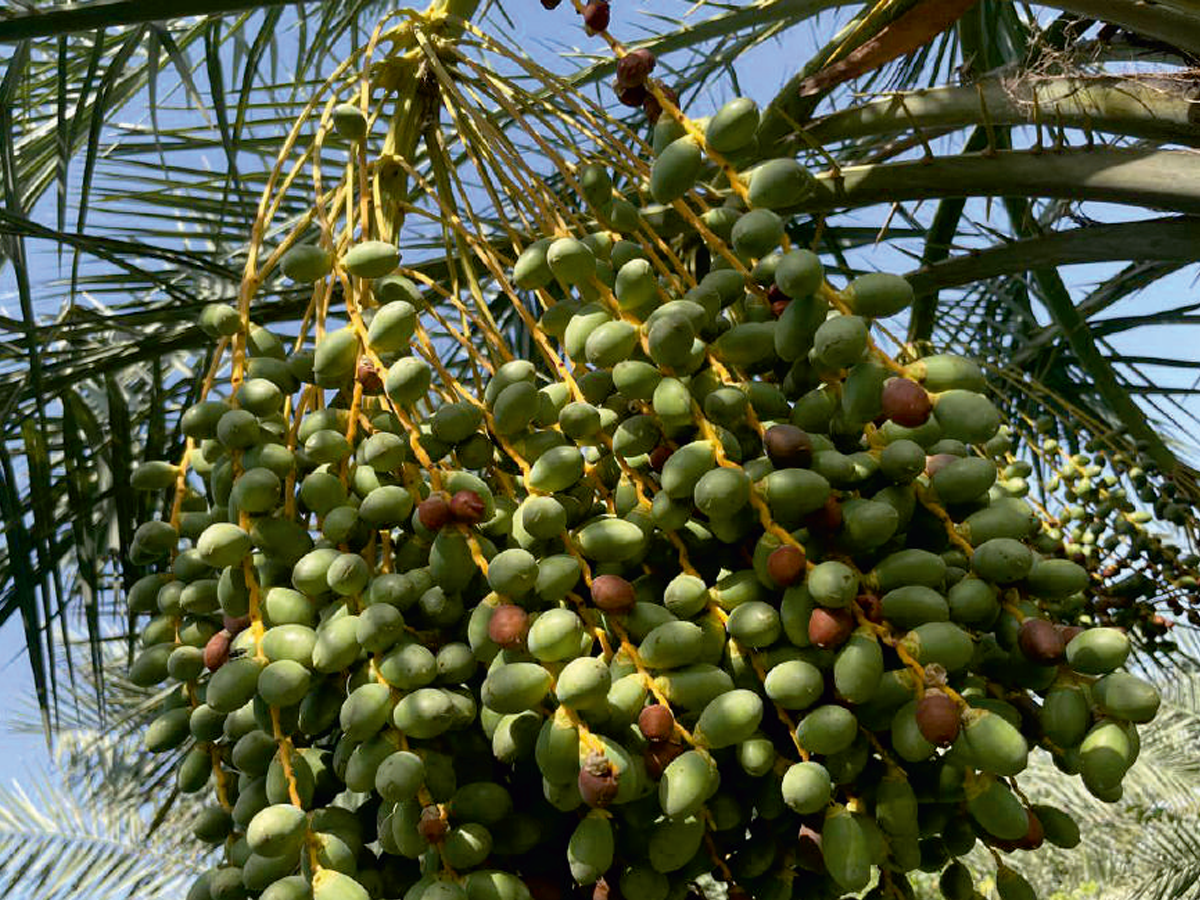
The spatial and temporal distribution of the lesser date moth (LDM) Batrachedra
amydraula Meyrick, 1916 (Lepidoptera, Batrachedridae), a key pest of date palms Phoenix
dactylifera L. across Basrah Province during the fruiting season of 2024, was evaluated in this
study. Results revealed that the lesser date moth was distributed in all the surveyed districts of
Basrah. Al-Nashwa and Abu-Al Khaseeb Districts recorded the highest infestation surveyed,
whereas Al-Dair, Safwan, Al-Sibah, and Al-Faw Districts recorded the lowest infestation
rates. The cultivars Halawi, Zahdi, and Brim were the most susceptible, while the cultivars
Barhi and Dieri were the least infested. The fruit developmental stage had a strong effect on
the intensity of infestation, which reached its peak at the Chameri stage. Over time,
monitoring revealed three peaks of infestation of the lesser date moth. These peaks occurred
in late May, in early June, and in late June, which coincided with the early stages of fruit
development (Chameri and Hababok). Adult activity of LDM began in early March and
peaked in early May; however, adult activity disappeared by mid-July. Additionally, negative
and weak positive correlations were noted between infestation and temperature and between
infestation and humidity, respectively. The study concluded that B. amydraula is widely
distributed and exhibits temporal fluctuations across Basrah, with population dynamics
dependent on the environmental conditions, the susceptibility of the host plants, and the
developmental stages of the plants.
Keywords: Basrah, Batrachedra, Date palm, LDM, Phoenix.

DISTRIBUTION AND TEMPORAL ABUNDANCE





اترك تعليقاً